
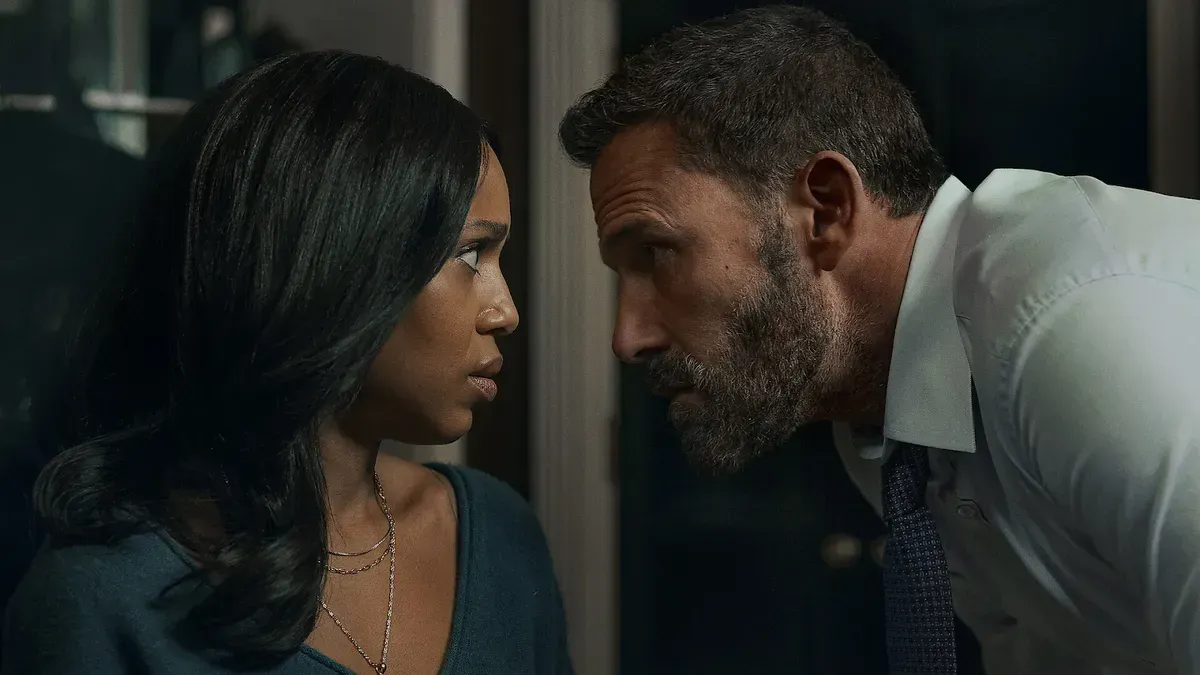
Warning: full spoilers for Netflix's Animals below, including the twist and the final scene.
I went into Animals expecting a straightforward "rich man's kid gets kidnapped" thriller. Ben Affleck directing, Ben Affleck starring, Kerry Washington and Gillian Anderson alongside him, a ransom, a ticking clock. Simple. What I got instead was a film that pulls the rug out halfway through, then ends on one of the most cynical final beats I've seen in a Netflix movie this year. I've been chewing on that ending since the credits rolled, and I don't think the film is saying what a lot of people assume it's saying.
So let me walk you through it the way I understood it: what actually happens, who is behind the kidnapping, why Mark does what he does, and whether that ending is clever or just cold.
Animals ending explained: the short version
The kidnappers took the wrong boy. They grabbed Hector, the son of the Kimballs' nanny, instead of Mark's son Denny. Mark hires a fixer to have the kidnappers killed rather than pay them. The plan collapses at the Los Angeles River, and it is Hector's undocumented father, Ramon, who fires the shot that saves everyone. Mark then hides the bodies, takes the credit for the rescue, and rides the lie all the way to the mayor's office, while Ramon quietly leaves for Mexico with his family.
Animals plot recap: what happens before the ending
Mark Kimball (Ben Affleck) is a wealthy lawyer running as an independent for Mayor of Los Angeles. On paper he is the dream candidate: military service, time as a teacher, the right speeches, fluent Spanish. Underneath, everything is rotting. He has secretly poured the family's money into the campaign, and his campaign manager Sam (Steven Yeun) is pushing him to borrow against the house without telling his wife.
His wife Abigail (Kerry Washington), a therapist, has her own secret: she is having an affair with a university professor named Ron (Ray Fisher). So before a single crime is committed, this is already a marriage held together by performance.
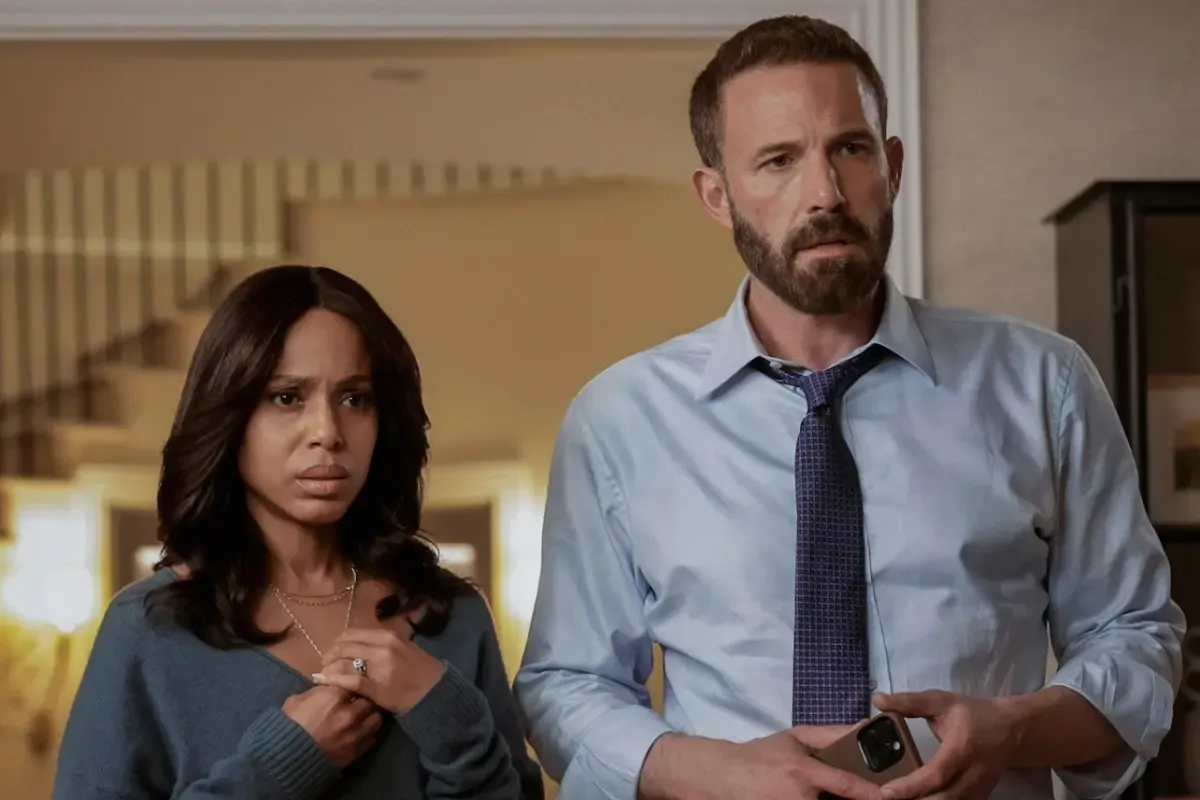
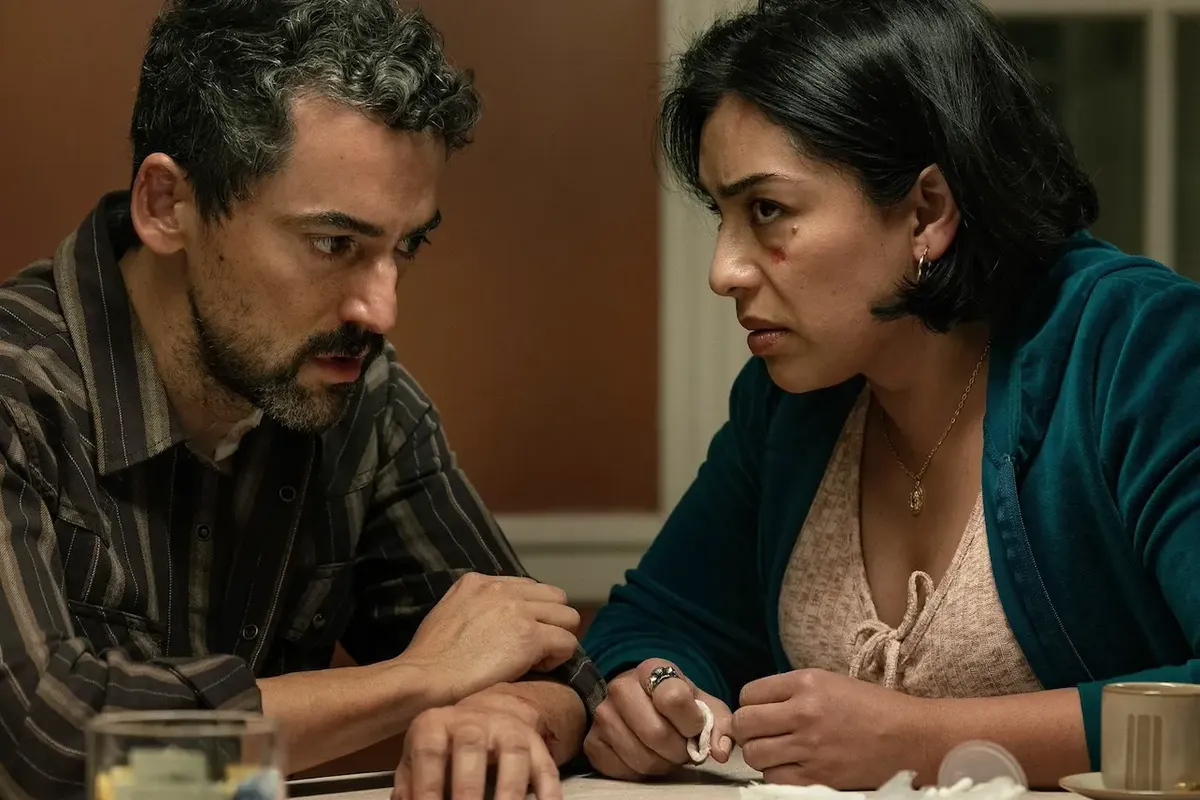
There is one early scene I'd tell you to remember, because the whole ending hangs on it. The family's nanny, Cecilia (Adriana Paz), asks the Kimballs to give some work to her partner Ramon (Luis Gerardo Méndez), who is undocumented. Mark and Abigail say no. Not because they dislike him, but because hiring an undocumented worker could cost Mark votes. Keep that refusal in your head.
Then comes Halloween night. Cecilia takes Denny out trick-or-treating, and Ramon's son Hector comes along. A call comes in: Denny has been taken, and the kidnapper wants $7 million in cash within hours.
The twist: who was actually kidnapped in Animals?
Here is the turn that changes the whole film. Denny was never taken. He and Hector were wearing matching Halloween costumes, and the kidnappers grabbed the wrong child. Denny walks back in through the front door, safe. The boy in the kidnappers' hands is Hector, the son of the man Mark refused to help.
This is where the film gets interesting for me, because the question quietly shifts. It is no longer "how far would you go to save your child?" It becomes "how far would you go to save someone else's child, when it costs you everything and nobody is watching?"
The kidnappers don't lower the price either. They still want the full $7 million. And the film is brutally honest about why Mark keeps going: Sam points out that if a mayoral candidate is seen abandoning a Latino child to die, his campaign with Latino voters is finished. So even Mark's "decent" choice to stay involved has a political calculation baked into it. I found that detail more damning than anything in the finale.
Who is Dayle Burton, and what are the three options?
Mark doesn't have $7 million. That's how Dayle Burton (Gillian Anderson) enters the story. Sam knows her: she is a fixer who handles kidnappings for rich clients who can't or won't go to the police. She fronts the ransom money, charges a $1.4 million fee on top, and takes the deed to the Kimball house as security. She also insists the couple confess their secrets to her, on the logic that the kidnapper is probably someone with a grudge.
Once the wrong-child twist lands, Dayle lays out three choices:
- Pay the ransom and hope the kidnappers keep their word.
- Go to the police, which puts Hector's life at serious risk.
- Kill the kidnappers at the handover and take the money back.
Abigail rejects the third option outright. But the night before the exchange, Mark finds out about her affair with Ron. They have it out, and she ends the conversation by more or less telling him to do what he thinks he has to do. Mark goes back to Dayle and picks option three, claiming Abigail is on board. Dayle records him giving the order. That recording matters later.
My read: Mark doesn't choose the hit because it is safest for Hector. He chooses it because it is the only option where he gets his money back. Paying means financial ruin. Killing means he might keep the house, the campaign and the image. The film never has him say this out loud, but I don't think it needs to.
Who are the kidnappers in Animals, and what is their motive?
This is the part I suspect most people missed, because the film barely stops to explain it. The kidnappers spend nearly all their screen time behind giant rabbit masks, and on first watch they feel like faceless thugs after a payday.
They aren't. The ringleader is a man named James Bureaux, and his motive is revenge, not just money. Before politics, Mark ran his own law firm, and that firm drove a clean-water case referred to as the Environmental Action Act. It made Mark look like a crusader. It also wiped out a string of small businesses in the San Fernando Valley. Bureaux was one of those owners. His business closed, his wife filed for divorce, and he lost everything.
So when the kidnapper tells Mark on the phone that he wants him to know what living with humiliation feels like, and Mark answers that he has no idea who he is, that exchange is the point. Mark destroyed this man's life and never even learned his name.
The film strongly suggests the rest of the crew are fellow business owners ruined by the same case, though it never confirms that for each of them. I think that vagueness is a genuine weakness, and I'll come back to it.
What I do like is the mirror it sets up. Bureaux is what Mark would look like if the money ran out and the mask slipped: a man who lost his business, his marriage and his standing, and turned to violence. Mark is one bad election away from being him.
The LA River showdown: who shoots whom
The exchange happens in the concrete flood-control channels of the Los Angeles River. It moves fast, so here is the sequence as I followed it:
- Mark arrives with the bag of cash. Dayle's gunman, Rand, is hidden in position.
- A kidnapper in a rabbit mask sends Hector down the slope, and Mark catches him.
- Two masked kidnappers move in for the money. Rand shoots them both dead.
- Dayle's plan assumed there were only two. A third kidnapper, Bureaux, appears and shoots Rand and Dayle.
- Bureaux turns on Mark and Hector. Mark is out of options.
- Ramon, who has secretly followed Mark, shoots Bureaux with Mark's grandfather's old rifle.
So the man who saves the day is the one Mark wouldn't hire. Ramon isn't a trained gunman or a fixer on a retainer. He is a father who refused to sit at home and trust that powerful people would do right by his son. Given how the Kimballs treated him an hour of screen time earlier, he was right not to trust them.
Does Dayle die at the end of Animals?
The film never shows a clean, confirmed death, but I think the answer is yes. Dayle is left bleeding on the concrete. Mark stands over her, looks at her without much feeling, and takes her phone, the one holding the recording of him ordering the killings. He does not call for help.
Whether he finishes her off or simply lets her die is left open. To me that ambiguity is the sharpest moment in the film. Dayle is the only living person who can prove what Mark ordered, and she holds the deed to his house. Her death solves both problems at once. Mark doesn't have to pull a trigger. He only has to do nothing, which is somehow worse.
Why does Mark lie and cover up the truth?
After the shooting, Mark removes the bodies and builds a new version of the night. In his telling:
- Hector was the target all along, not Denny.
- The ransom was a modest sum, not $7 million.
- There was no fixer and no hired gunman.
- Mark himself shot the kidnapper to save the boy.
He admits to one thing only, keeping an unregistered rifle, and frames it as a desperate father figure's mistake. He gets probation and community service for it. That small confession is a smart piece of writing: it makes the bigger lie more believable.
Why lie? There are three reasons layered on top of each other, and I think the film wants you to notice all of them.
First, self-protection. The truth is that Mark hired a hit squad and three or more people died because of it. That is prison, not politics.
Second, it protects Ramon. This is the argument Mark can tell himself at night. Ramon is undocumented and he killed a man with an illegal gun. If the truth comes out, Ramon is the one who gets prosecuted and deported, not celebrated. So the lie is, on its surface, a favour.
Third, and this is the real one: it wins the election. A white candidate who risks his life and fortune to save a Latino child is a campaign ad you couldn't buy. Ramon even backs the story publicly. Mark's support surges and he wins comfortably.
What bothers me, in a good way, is how the same act means opposite things depending on who did it. Ramon shooting a kidnapper is a crime that would destroy him. Mark claiming that exact same shot is heroism that makes him mayor. Nothing about the act changed. Only the name attached to it.
What happens to Ramon, Cecilia and Hector? Who gets the $7 million?
Ramon, Cecilia and Hector leave the United States and go back to Mexico. They don't leave empty-handed: they go with the cash from the handover, the money Dayle had fronted. The film doesn't show a neat transaction, but it strongly implies Ramon ends up with the ransom money and plans to start a ranch.
You can read this two ways, and I honestly went back and forth.
The generous reading is that Ramon gets a real ending. His son is alive, his family is together, and he has enough money to build the life he could never have had in Los Angeles. When Mark calls him a hero, Ramon replies that it depends on your point of view, which tells me he sees the deal for exactly what it is.
The darker reading, and the one I lean towards, is that it is hush money. Ramon is the only other witness. He gets paid, he leaves the country, and the one man who could contradict the mayor is now thousands of miles away with every reason to stay quiet. The hero of the story has to disappear so the fake hero can take the stage.
Do Mark and Abigail stay together?
Yes. Mark comes clean about emptying their account, Abigail's affair is out in the open, and the next morning she sends Ron an apology that reads like a goodbye. She stands beside Mark and supports his version of events.
I don't see this as forgiveness. They stay together because they now share a secret that could put both of them away. Their marriage was a performance before the kidnapping, and after it, the performance simply has higher stakes. Of all the outcomes in the film, I found this one the bleakest.
The final scene of Animals explained
The film closes with Mark as the newly elected mayor, being interviewed and praised as a hero, with talk of even bigger political ambitions ahead. He says he simply understood what had to be done. As he speaks, the film cuts back to Dayle dying on the concrete.
That cut is the entire message. "What had to be done" wasn't saving Hector. Ramon did that. What Mark did was stand over a dying woman, take her phone, and walk away. The speech is about courage. The image is about self-preservation.
Some critics felt the ending plays as oddly uplifting, as if we are meant to be happy for him. I didn't read it that way at all. Mark opens the film promising voters transparency and ends it hiding several deaths and wearing another man's bravery. I think the "happy ending" music is the joke. He got everything he wanted, and it cost him whatever was left of the person he claimed to be.
Why is the movie called Animals? The title meaning
Nobody in the film is literally an animal, obviously, and there's no neat line that spells it out. The way I see it, the title is about what people become once the polish comes off. Every major character starts the film performing a role: the principled candidate, the supportive wife, the loyal staffer, the professional fixer. Under enough pressure, each one drops the act and behaves purely on instinct: fear, ambition, survival.
Affleck has described the idea behind the film in similar terms, telling Entertainment Weekly: "We live in a world that increasingly asks us to live a presented life." The film is his answer to what happens when you can't keep that presentation up any longer.
The rabbit masks fit this too. The kidnappers wear animal faces, but they are the most honest people in the story about what they want. The real masks are the human ones the Kimballs wear every day.
And here's the twist of the knife: the one character who acts out of plain love rather than calculation is Ramon. The man the Kimballs treated as a liability turns out to be the only one who isn't an animal.
Is Animals based on a true story?
No. Animals is fiction, written by Connor O. McIntyre, Billy Ray and Ben Affleck. Mark Kimball is not based on a real Los Angeles politician, and there was no real kidnapping case behind it.
It does have a clear ancestor, though. The wrong-child kidnapping, where a wealthy man must decide whether to pay a fortune for an employee's son, comes straight from Akira Kurosawa's 1963 classic High and Low, which was itself adapted from an Ed McBain novel. Spike Lee remade the same story as Highest 2 Lowest in 2025.
The difference is in what the rich man does. In Kurosawa's version, the businessman pays, loses everything, and keeps his soul. Affleck flips it: his man refuses to truly pay, keeps everything, and loses his soul. If you've seen High and Low, that reversal makes the ending of Animals hit much harder, and I think it's the smartest idea in the film.
What didn't work for me
I like the ending more than most critics seem to, but I'm not going to pretend the film is airtight.
- The kidnappers are underwritten. Bureaux's grudge is the thematic backbone of the story, and the film reveals it so quickly that plenty of viewers will finish it thinking the villains were random. A single proper scene with him would have fixed that.
- The cover-up is too easy. Multiple bodies at the LA River, a missing fixer, a missing gunman, and nobody investigates a mayoral candidate's story? The film asks for a lot of goodwill here.
- Abigail's affair goes nowhere. It exists to push Mark towards option three and then mostly evaporates. Ray Fisher is barely in the film.
- Steven Yeun is wasted. Sam's history with Dayle is teased and never paid off.
- Not enough Gillian Anderson. She is the best thing in the film. I'd happily watch an entire movie about Dayle's line of work.
- The tension is thinner than it should be. For a one-night ransom thriller, I rarely felt Hector was in real danger.
My verdict: is Animals worth watching?
The critics have been rough on this one. As I write this, it is sitting at roughly 40% on Rotten Tomatoes, and several reviews call it flat or forgettable. I think that's a little harsh, but I understand it.
As a thriller, Animals is average. It is well shot, briskly paced at about an hour and 46 minutes, and never boring, but it rarely gets the pulse going the way Gone Baby Gone or The Town did.
As a story about power, though, it stuck with me. The idea that a privileged man can turn someone else's courage into his own career, and that the system will reward him for it, is genuinely uncomfortable. The film doesn't punish Mark, and I think that's the honest choice. A version where he gets caught would be more satisfying and less true.
My rating: 3 out of 5. Watch it for Gillian Anderson, Luis Gerardo Méndez, and an ending you'll want to argue about. Just don't expect Affleck's best work behind the camera.
Animals cast and characters
| Actor | Character | Who they are |
|---|---|---|
| Ben Affleck | Mark Kimball | Lawyer and independent candidate for Mayor of Los Angeles |
| Kerry Washington | Abigail Kimball | Mark's wife, a therapist |
| Gillian Anderson | Dayle Burton | Fixer who handles kidnappings for wealthy clients |
| Steven Yeun | Sam Allison | Mark's campaign manager |
| Luis Gerardo Méndez | Ramon | Cecilia's partner and Hector's father |
| Adriana Paz | Cecilia Trujillo | The Kimballs' nanny |
| Ray Fisher | Ron Sperling | Professor having an affair with Abigail |
| Christopher Woodley | Denny Kimball | Mark and Abigail's son |
| Jacob Estrada | Hector | Ramon's son, the boy who is actually kidnapped |
One piece of trivia I enjoyed: Matt Damon was originally going to play Mark, with Affleck only directing. Damon had to step away for another project, stayed on as a producer, and Affleck took the role himself.
Will there be an Animals 2?
Nothing has been announced, and I'd be surprised if it happens. The story is complete and was clearly built as a standalone film. That said, the ending does leave doors open: Mark is talking about higher office, Ramon knows the truth, and Dayle surely had associates who will wonder where she and their money went. If Netflix ever wanted a follow-up, a secret like that is exactly the kind that comes back.
Animals FAQ
Who was kidnapped in Animals on Netflix?
Hector, the son of Ramon, was kidnapped. The kidnappers meant to take Mark Kimball's son Denny but grabbed the wrong boy because the two were wearing matching Halloween costumes.
Who are the kidnappers in Animals?
The ringleader is James Bureaux, a business owner from the San Fernando Valley who lost his company and his marriage after a clean-water case led by Mark's law firm. The film implies his accomplices were ruined by the same case. Their motive is revenge as much as money.
Who kills the last kidnapper in Animals?
Ramon does. He secretly follows Mark to the Los Angeles River and shoots the final kidnapper with Mark's grandfather's rifle, saving both Mark and Hector. Mark later tells the public that he fired the shot.
Does Dayle die in Animals?
The film implies she does but never confirms it on screen. She is shot by the third kidnapper and left bleeding. Mark takes her phone and walks away without getting help.
Why does Mark lie at the end of Animals?
The truth would expose that he ordered the kidnappers killed. The lie protects him, keeps the undocumented Ramon from being prosecuted, and makes Mark look like a hero, which wins him the election.
Does Mark Kimball become mayor?
Yes. His false account of the rescue boosts his support, particularly among Latino voters, and he wins the Los Angeles mayoral race. The ending hints he is already thinking about higher office.
Who gets the $7 million in Animals?
The film strongly implies Ramon does. He, Cecilia and Hector leave for Mexico with the cash from the handover, where he plans to start a ranch.
Do Mark and Abigail get divorced?
No. They stay together despite his secret spending and her affair with Ron. They are bound by the cover-up more than by forgiveness.
Is Animals based on a true story?
No, it is fiction. Its central premise is inspired by Akira Kurosawa's 1963 film High and Low, which was adapted from an Ed McBain novel.
Why is the movie called Animals?
The title refers to how the characters behave once their public image falls away. Under pressure, each one acts on raw instinct such as fear, ambition and survival.
Is there a post-credits scene in Animals?
No post-credits scene has been reported. The story ends with Mark's interview as mayor.
How long is Animals and what is it rated?
Animals runs for about 1 hour and 46 minutes and is rated R.
Where was Animals filmed?
It was shot in Los Angeles in spring 2025, with locations including the Los Angeles River and the Original Farmers Market.
Will there be an Animals 2?
Netflix has not announced a sequel. The film was made as a standalone story.
What did you make of the ending? Did Mark protect Ramon, or did he buy his silence? I lean towards the second, but I'd love to hear the case for the first in the comments.